

The State Council Information Office (SCIO) held a press conference at 10:00 a.m. on Friday, July 17, 2026 in Beijing. Li Bin, spokesperson and Deputy Administrator of the State Administration of Foreign Exchange (SAFE), Zhao Yuchao, spokesperson of the SAFE and Deputy Director General of the Balance of Payments Department of the SAFE, and Xiao Sheng, Director General of the Capital Account Management Department of the SAFE, briefed journalists on China's foreign exchange receipts and payments data for the first half of 2026 and took questions. The full transcript is as follows.
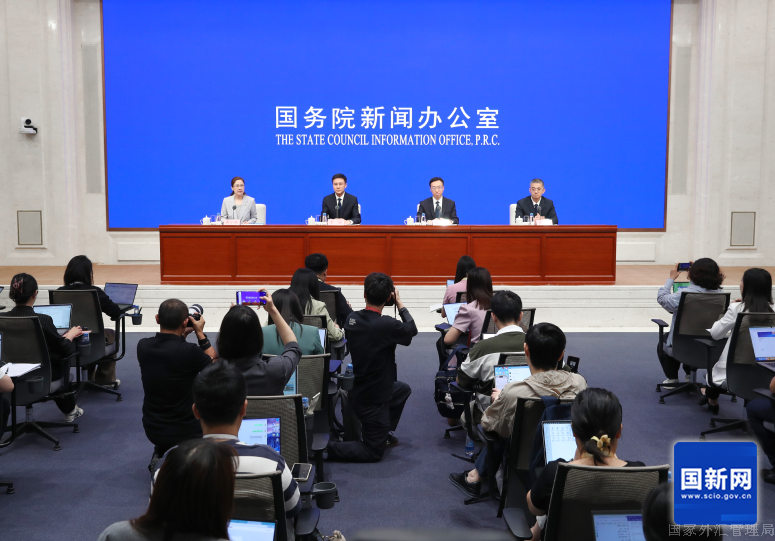
(Press conference site / Photo by Liu Jian)
Shou Xiaoli, director general of the Press Bureau of the State Council Information Office (SCIO) and spokesperson of the SCIO:
Good morning, ladies and gentlemen. Welcome to this regular economic data press conference hosted by the State Council Information Office (SCIO). Today, we have with us Mr. Li Bin, spokesperson and deputy administrator of the SAFE, to brief you on China's foreign exchange receipts and payments performance for the first half of 2026 and respond to media questions. Also present are Mr. Zhao Yuchao, spokesperson of the SAFE and deputy director general of the Balance of Payments Department of the SAFE, and Mr. Xiao Sheng, Director General of the Capital Account Management Department of the SAFE.
Now let's give the floor to Mr. Li Bin.
10:00:34, July 17, 2026
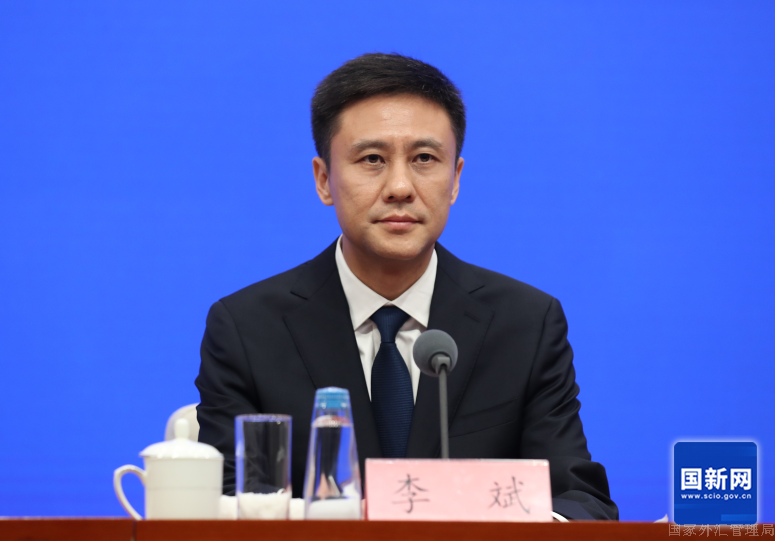
(Li Bin / Photo by Xu Xiang)
Li Bin, spokesperson and Deputy Administrator of the SAFE:
Good morning, friends from the press. Thank you for your attention, support, and coverage of foreign exchange administration work. Today I will first walk you through the overall picture of China's cross-border foreign exchange receipts and payments in the first half of this year, then take questions together with my colleagues.
Since early 2026, the external environment has been complex and volatile amid escalating geopolitical conflicts and heightened swings in global financial markets. China has steadfastly pushed forward high-quality development and accelerated the fostering of a new development paradigm to upgrade its economic structure. The SAFE has deepened reform and opening-up in the foreign exchange sector, rolled out more policies to facilitate cross-border trade and investment, strengthened foreign exchange market supervision, effectively responded to external shocks, and bolstered the sound growth of foreign-related economy. Overall, China's foreign exchange market operated steadily in the first half of 2026 with brisk trading and stronger resilience, marked by five major features:
First, the amount of cross-border receipts and payments hit an all-time high. In the first half of 2026, total cross-border receipts and payments by non-banking sectors reached USD 9.2 trillion, up 21% year-on-year, a record for the same period. The RMB accounted for 52.9% of all cross-border settlements, rising 1.3 percentage points from the full-year reading of 2025. Foreign exchange settlement and sales by banks stood at USD 2.9 trillion, rising 24% year-on-year and also setting a new historical high for the first half-year. These figures reflect robust momentum in China's foreign-related economy and more active cross-border trade and investment activities.
Second, the trading volume in the Chinese foreign exchange market posted steady growth. In the first half of the year, total transactions in the Chinese foreign exchange market reached USD 22.1 trillion, representing a year-on-year rise of 5%. The growth rate was 1.5 percentage points higher than that for the whole year of 2025. Of the total, spot transactions stood at USD 8.3 trillion and derivatives transactions at USD 13.8 trillion, accounting for 38% and 62% of total market turnover, respectively.
Third, cross-border capital registered a net inflow. In the first half of the year, non-banking sectors, including enterprises and individuals, recorded a net cross-border capital inflow of USD 247.2 billion. In terms of month-on-month changes, net cross-border capital inflows remained at a relatively high level in January and February, as enterprises front-loaded their payment collections ahead of the Spring Festival. In March, escalating geopolitical tensions and heightened volatility in global financial markets led to a mild net outflow of cross-border capital, before net inflows resumed afterwards. The scale of net inflows moderated starting from June. By category, net inflows under goods trade continued to increase year on year, foreign investment in China saw an overall rebound, income from trade in services grew faster, narrowing the services trade deficit, and outbound investment by domestic entities maintained steady growth on the whole.
Fourth, expectations in the foreign exchange market remained stable. Banks posted a surplus of USD 271.2 billion in foreign exchange settlement and sales in the first half of the year. In recent months, the US Dollar Index climbed in June while the RMB edged down moderately against the US dollar. Many enterprises settled foreign exchange proceeds when the exchange rate strengthened, pushing the month-on-month expansion of the foreign exchange purchases and sales surplus. The volume of purchases and sales of foreign exchange have remained broadly balanced since July. For the first half of the year, the foreign exchange banking purchase ratio, which gauges enterprises' willingness to convert forex earnings into RMB, stood at 65%, and the foreign exchange banking sale ratio, which reflects demand for forex purchases, came in at 61%, largely unchanged from 2025. These figures indicate that market participants, including enterprises and individuals, conducted foreign exchange purchase and sales in a generally rational and orderly manner.
Fifth, China's official foreign exchange reserves registered a moderate increase. As of end-June 2026, reserve assets stood at USD 3.4163 trillion, representing an increase of USD 58.4 billion from end-2025.
Against a turbulent external backdrop, China's foreign exchange market has weathered external shocks and maintained stable operations with robust vitality and resilience since the start of the year. Going forward, SAFE will fully implement the decisions and arrangements of the CPC Central Committee and the State Council, deepen reform and opening-up in foreign exchange administration with more solid, forceful measures, prudently forestall and defuse risks stemming from external shocks, and build a foreign exchange administration framework that is "more convenient, more open, more secure, and more intelligent". This will provide strong support for high-quality economic development and lay a solid foundation for a sound start to the 15th Five-Year Plan period. That's a brief introduction on my part. My colleagues and I are ready to take your questions. Thank you.
10:09:57, July 17, 2026
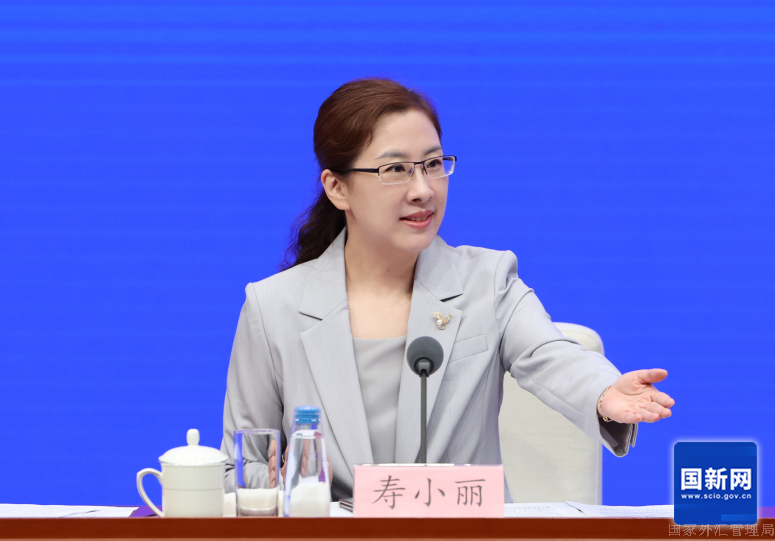
(Shou Xiaoli invites journalists to raise questions / Photo by Luan Haijun)
Shou Xiaoli:
We will now open the floor for questions.
10:10:21, July 17, 2026

(Journalist from Seashell Finance of the Beijing News asks questions / Photo by Liu Jian)
Journalist from Seashell Finance of the Beijing News:
You just outlined the sound performance of the foreign exchange market in the first half of 2026. Given the prolonged complexity and volatility of the external landscape ahead, what is your outlook for China's foreign exchange market in the second half of 2026? Thank you.
10:13:33, July 17, 2026
Li Bin:
Thank you for your question and your attention to the foreign exchange situation. As I just noted, the stable operation of China's foreign exchange market amid external shocks this year has proven that internal factors play a decisive role in market performance. Sustained high-quality development, expanded high-level opening-up, robust foreign trade vitality, and enhanced market resilience will continue to underpin the steady operation of China's foreign exchange market.
First, accelerated development of new quality productive forces, paired with strong economic resilience and ample room for growth, will further shore up market confidence. China's emerging industries are booming, integrated technological and industrial innovation is picking up speed, and overall innovation capacity is rising rapidly to bolster high-quality growth. In the first half of 2026, the value-added of high-tech manufacturing enterprises above designated size rose 13.3% year-on-year, nearly 4 percentage points faster than full-year 2025 growth. More Chinese firms are emerging as key players in such areas as large AI models, quantum technology, and new energy. As a major economy, China boasts outstanding resilience and development potential. Backed by diversified energy supplies and rapid expansion of the new energy sector, the Chinese economy has demonstrated strong capacity to absorb shocks such as geopolitical conflicts in the Middle East.
Second, China has made substantial progress in stabilizing foreign trade volume and optimizing trade structure, which will sustain active foreign exchange market transactions. Win-win cooperation built on comparative advantages is an inherent driver of market economy and trade growth. In the first half of 2026, China's total goods import and export volume exceeded RMB 25 trillion, up 16.9% year-on-year, serving as a key driver of cross-border payment expansion. Meanwhile, the foreign trade structure kept improving: exports of integrated circuits and the New Trio products contributed nearly half of total export growth, supplying high-quality goods to global markets. China's import volume hit a record high for the first half-year, outpacing export growth and creating new opportunities for global trade expansion. Looking ahead, technological innovation will inject fresh momentum into global trade. The global manufacturing Purchasing Managers' Index (PMI) has stayed above the expansion-contraction threshold for 11 consecutive months, while China's manufacturing PMI edged up month-on-month in June, facilitating balanced growth in imports and exports.
Third, China's orderly progress in opening up its economy has helped promote balanced cross-border capital flows. The first half of the year saw net inflows of foreign investment alongside steady growth in China's outbound investment. As of end-March 2026, China's external assets and external liabilities stood at roughly USD 12 trillion and USD 8 trillion, respectively, ranking among the world's largest stocks. Moving forward, China will unswervingly expand opening-up, further improve facilitation for inbound foreign investment, steadily broaden channels for domestic entities to conduct outbound investment, and foster more active, balanced two-way cross-border investment.
Fourth, the improving resilience of China's foreign exchange market provides a robust buffer against external shocks. In recent years, progress has been made in reforming the market-based RMB exchange rate formation mechanism. Market participants have grown more diversified, and independent market adjustment capacity has strengthened. An increasing number of enterprises adopt RMB pricing and settlement and deploy foreign exchange derivatives to hedge exchange rate risks. The share of RMB invoicing and settlement in goods trade has maintained an upward trend, and enterprises' forex hedging ratio via derivatives reached 35.3% in the first half of 2026, an increase of 5.3 percentage points over full-year 2025. Additionally, the macro-prudential policy toolkit for counter-cyclical regulation of forex market supply and demand has been continuously enriched and refined. All these factors reinforce market resilience and support stable operations.
We should note that the external environment remains complicated, and we will closely monitor shifts in global geopolitics, economic growth, inflation dynamics, and monetary policies of major economies. The SAFE will strengthen monitoring of cross-border capital flows, further boost the resilience and vitality of the foreign exchange market, improve macro-prudential management and expectation guidance, and safeguard stable market performance. Thank you.
10:14:12, July 17, 2026
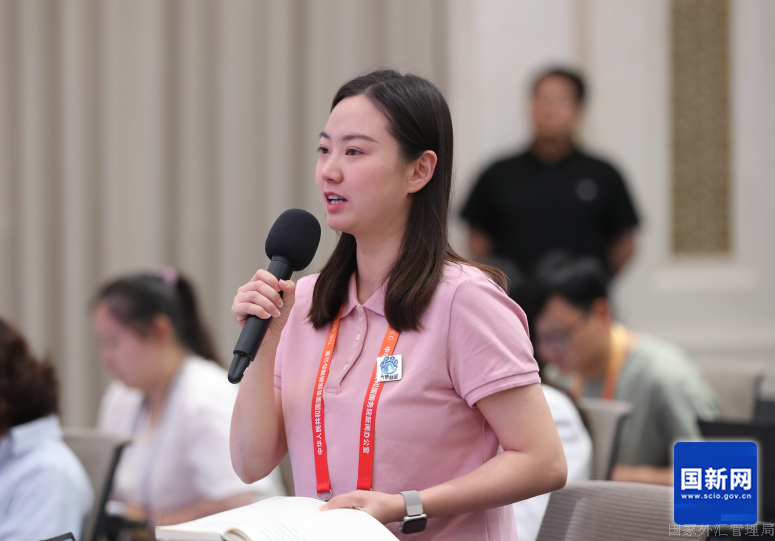
(Journalist from Elephant News asks questions / Photo by Liu Jian)
Journalist from Elephant News:
We learned that SAFE unveiled a package of incremental policies covering cross-border direct investment at the Lujiazui Forum. Could you brief us on these policies and their expected rollout timeline? Thank you.
10:20:11, July 17, 2026
Li Bin:
I will hand this question over to Xiao Sheng, Director General of the Capital Account Management Department of the SAFE.
10:20:36, July 17, 2026
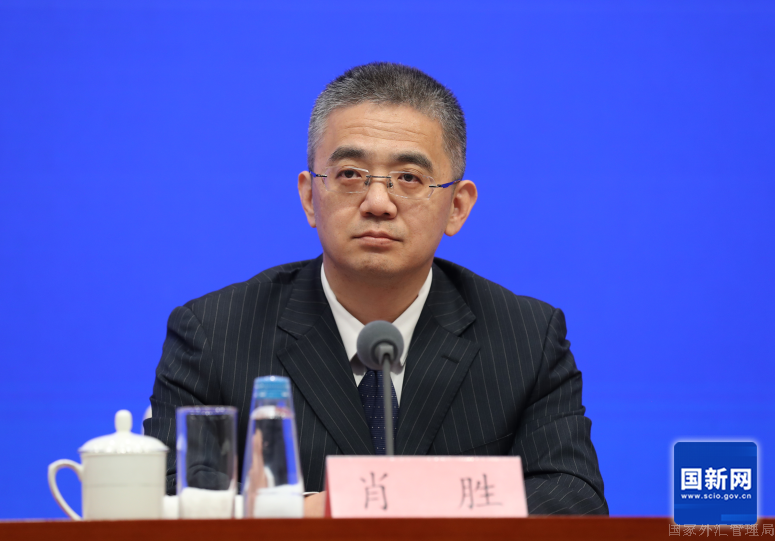
(Xiao Sheng / Photo by Xu Xiang)
Xiao Sheng, Director General of the Capital Account Management Department of the SAFE:
Thank you for your question. Since 2023, the SAFE has launched a package of cross-border investment and financing facilitation policies for three consecutive years, rolling out nearly 20 measures in total. Key measures include simplifying capital payment and usage procedures for foreign-invested enterprises (FIEs), supporting cross-border financing for sci-tech firms, shortening the negative list for income under capital accounts, and expanding regional coverage of bank-based foreign exchange registration services. These policies have greatly improved operational efficiency: some procedures have been cut from three working days to same-day completion, and documentary materials required for enterprise reviews have been halved. The measures have also delivered tangible support to the real economy, helping high-tech, specialized, sophisticated, and innovative SMEs expand financing channels and lower financing costs.
Since 2026, in response to new developments and changing circumstances, the SAFE has conscientiously implemented the decisions and arrangements of the CPC Central Committee and the State Council. Building on extensive research into the needs of banks, enterprises, and other market participants, and in line with the process of high-level opening-up of the capital account, SAFE plans to roll out another "package" of policies to further enhance the facilitation of cross-border investment and financing. This batch of policies falls mainly into three categories:
First, we will further streamline procedures for direct investment. To meet FIEs' demand for higher investment efficiency, we will further simplify the procedures for foreign exchange purchases under the capital account, supporting efforts to stabilize, consolidate, and improve the quality of foreign investment utilization. For Chinese enterprises going global, we will streamline review procedures for outbound capital remittance to guarantee efficient, convenient capital deployment for regular business operations.
Second, we will expand high-level opening-up of cross-border financing. To broaden coverage of sci-tech and green financial services, we will expand the scope of eligible entities under cross-border financing facilitation policies and roll out the green external debt pilot nationwide. Meanwhile, to satisfy FIEs' risk hedging needs and enable more flexible cross-border capital allocation, we will optimize macro-prudential management rules for corporate cross-border financing.
Third, we will improve the registration and administration of capital account transactions. Taking into account enterprises' practical need for greater convenience in handling cross-border investment and financing transactions, we plan to further delegate certain registration procedures to banks for direct processing, and expand the range of capital account transactions available through online registration. This will raise the level of digitalization in foreign exchange administration and further reduce enterprises' "legwork costs."
The above reform measures will be formally issued and implemented after completing relevant regulatory procedures. Thank you.
10:20:53, July 17, 2026

(Journalist from Hong Kong Bauhinia Magazine asks questions / Photo by Liu Jian)
Journalist from Hong Kong Bauhinia Magazine:
Global innovative capital has stepped up investment in China this year. Based on the latest data, how would you assess the overall performance of inbound foreign investment, and what is your outlook for foreign investment prospects? Thank you.
10:21:06, July 17, 2026
Li Bin:
I'll hand it over to Zhao Yuchao, Deputy Director General of the Balance of Payments Department of the SAFE to answer this question. 10:22:26, July 17, 2026
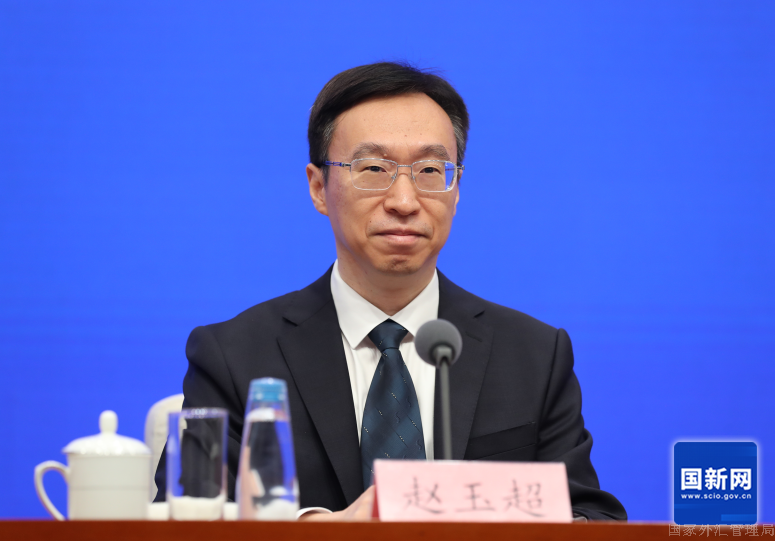
(Zhao Yuchao / Photo by Xu Xiang)
Zhao Yuchao, spokesperson of the SAFE and Deputy Director General of the Balance of Payments Department of the SAFE:
Thank you for your question. In recent years, China has remained committed to expanding high-level opening-up, using the certainty of its own development to navigate the uncertainties of the external environment, offering a broad and promising market for global capital investment.
Inbound foreign investment has maintained positive momentum so far this year. Balance of payments data show net inflows of all types of foreign investment reached approximately USD 160 billion in the first five months, markedly higher than the same period last year, covering direct investment, portfolio investment, as well as overseas deposits and loans absorbed by China. On direct investment, net inflows of foreign equity investment topped USD 50 billion in the first five months. New registered capital inflows remained stable, while reinvested earnings of FIEs rose 35% year-on-year. As of the end of the first quarter of this year, the stock of foreign direct investment (FDI) in China exceeded USD 4 trillion. Excluding countries and regions functioning as offshore financial centers, China still ranked second among economies worldwide in terms of FDI stock. In terms of investment flows, China's foreign investment structure has continued to shift toward higher quality and emerging sectors. Data on cross-border payments and receipts from SAFE showed that in the first half of the year, foreign capital inflows into China's high-tech services and high-tech manufacturing sectors increased by 61% year on year, accounting for 36% of total capital inflows, up 11 percentage points from the same period last year. This indicates that in recent years, foreign investors in China have gradually shifted their focus from leveraging the cost and scale advantages of "Made in China" to jointly participating in the development of "Created in China."
Inbound foreign investment is expected to sustain an upward trend, supported by three factors. First, industrial upgrading and technological innovation in China will continuously generate new investment opportunities and foster a more stable, attractive business environment for foreign capital. Second, steady progress in institutional opening-up, improved service guarantee systems for foreign investors, and optimized financial connectivity frameworks will create a more favorable policy landscape. Third, amid complex global dynamics, China's strong economic resilience and stable RMB exchange rate will provide diversified asset allocation options for global capital.
Going forward, the SAFE will coordinate with relevant authorities to systematically advance reforms in foreign investment sectors, steadily improve cross-border investment and financing facilitation, and establish a standardized, streamlined, user-friendly, goal-aligned institutional framework matching high-level opening-up and high-quality development. This will further facilitate global capital investment in China and encourage more long-term value investment by foreign entities. Thank you.
10:23:52, July 17, 2026
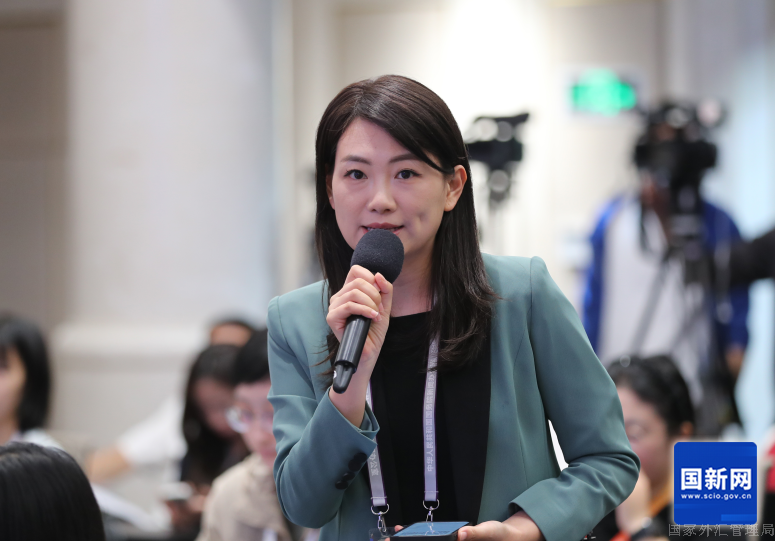
(Journalist from China Central Television asks questions / Photo by Liu Jian)
Journalist from China Central Television (CCTV):
China's external asset stock has repeatedly hit new highs in recent years, and the balance of payments has demonstrated strong inherent stability. What are the characteristics of China's balance of payments structure in recent years? What new changes have there been since the beginning of this year? Thank you.
10:26:52, July 17, 2026
Li Bin:
Thank you for your question and your attention to the balance of payments. The balance of payments records all foreign-related transactions of an economy over a given period, including trade in goods, trade in services, and various forms of outward investment and utilization of foreign capital. Among these, trade in goods and services is recorded under the current account, while investment activities are recorded under the capital and financial account. Because countries differ in their economic structures, stages of development, and the development levels of their manufacturing and services sectors, they tend to form different balance of payments structures, two of which are common. In one type, imports exceed exports, resulting in a current account deficit; this requires financing from abroad to cover the gap, which in turn produces a surplus in the capital and financial account, thereby achieving an overall balance of payments. In the other type, exports exceed imports, resulting in a current account surplus; the resulting net capital inflow is then deployed abroad by domestic entities, which shows up as a deficit in the capital and financial account, when domestic entities' holdings of overseas assets increase correspondingly. Therefore, from the perspective of overall balance of payments equilibrium, a current account surplus corresponds to a capital and financial account deficit—the two rise and fall together. When the current account surplus increases, the capital and financial account deficit rises correspondingly, which does not mean that pressure for cross-border capital outflows has intensified.
In China's case, a self-balancing pattern of the balance of payments has gradually taken shape, characterized by a current account surplus and a capital and financial account deficit. Since 2022, China's current account surplus and capital and financial account deficit have grown in tandem: capital inflows generated by the current account surplus have been allocated, through outward investment by banks, enterprises, and other entities, across different regions, industries, and financial markets worldwide. This has, on the one hand, met domestic entities' needs for international operations and diversified asset allocation, and on the other hand, supported industrial and financial market development in trade and investment partner countries. Since the beginning of this year, China's balance of payments has continued to follow this pattern: the current account has registered a surplus, while domestic entities have stepped up their outward investment. In the first five months, domestic entities' new outward investment exceeded USD 300 billion, and the scale of overseas assets has continued to grow. As of the end of March 2026, China's overseas assets stood at approximately USD 12 trillion, a record high, with net overseas assets exceeding USD 4 trillion, ranking second among all economies globally.
Looking ahead, China's balance of payments is expected to remain broadly balanced. China will stay committed to expanding domestic demand, vigorously boosting consumption, expanding effective investment, and promoting balanced development of imports and exports, all of which will help keep the current account surplus at a reasonable and balanced level over the medium to long term. At the same time, as China steadily expands institutional opening-up and broadens the space for outward investment cooperation, domestic enterprises will continue to pursue diversified global operations and asset allocation, and the scale of China's overseas assets will keep growing steadily.
That's my answer. Thank you.
10:27:24, July 17, 2026

(Journalist from Zhejiang Daily Chao News asks questions / Photo by Liu Jian)
Journalist from Zhejiang Daily Chao News:
What new shifts have taken place in enterprises' exchange rate risk management practices this year? What policies and services has the SAFE rolled out to support enterprises in strengthening their ability to manage exchange rate risk? Thank you.
10:30:51, July 17, 2026
Li Bin:
Thank you, I'll take this question. Since the beginning of this year, amid a complex and volatile external environment, China's foreign exchange market has operated in a generally stable manner, and two-way fluctuation in the RMB exchange rate has increased. We have observed that enterprises' awareness of proactively managing exchange rate risk has further improved, and they have adopted a variety of approaches to strengthen their exchange rate risk management. For example, some enterprises have both foreign exchange receipts and foreign exchange payments; by offsetting their foreign exchange income and expenditure, or their foreign exchange assets and liabilities, against each other, they can achieve a degree of natural hedging that weakens the impact of exchange rate fluctuations. Some enterprises use RMB for pricing and settlement to avoid foreign exchange exposure arising from currency mismatches. Others use foreign exchange derivatives to lock in exchange rates in advance, reducing the impact of exchange rate fluctuations on their business operations.
The SAFE has consistently made helping enterprises manage exchange rate risk a key priority, assisting them in better adapting to two-way fluctuation in the RMB exchange rate. Since the beginning of this year, we have continued to improve our policy offerings and services in this area.
First, we have continued to strengthen the promotion of the exchange rate risk-neutral philosophy. The exchange rate is determined by market supply and demand and is difficult to predict. In recent years, as two-way fluctuation in the RMB exchange rate has increased, enterprises need to hold even more firmly to the exchange rate risk-neutral philosophy, focusing on their core business, proactively taking measures to manage exchange rate risk, and minimizing the impact of exchange rate volatility on their core operations and financial performance as much as possible. Together with relevant government departments and financial institutions, the SAFE has continued to conduct outreach through a range of channels, including drafting guidelines, holding specialized training sessions, conducting research and consultations, and providing on-site guidance, with a focus on encouraging enterprises to pay closer attention to changes in market conditions, raise their risk-hedging awareness, and improve their capacity for independent decision-making.
Second, we have built a bridge for bank-enterprise services. At present, 130 major Chinese and foreign banks are able to provide foreign exchange derivatives services to enterprises. Naturally, enterprises need time to become familiar with banks' foreign exchange hedging services, while banks in turn need to understand each enterprise's foreign exchange business profile and hedging needs. To open up the flow of information between banks and enterprises, the SAFE has established and continuously refined a database of foreign-related enterprise information, which now covers 290,000 foreign trade enterprises on its service list. This information is shared with banks, helping them draw on the enterprise database to provide precise and efficient services.
Third, we have encouraged banks to raise the level of their services. Exchange rate hedging is, on the whole, a highly specialized area, and enterprises have long hoped that banks could offer better foreign exchange hedging services. To this end, the SAFE has simplified the documentation review requirements for banks handling foreign exchange derivatives transactions on behalf of enterprises, improving the timeliness and convenience of such transactions. We have also encouraged banks to keep making progress in innovating foreign exchange derivative products, expanding online trading channels, and strengthening the business capabilities of grassroots branches, so as to make it easier for enterprises to hedge exchange rate risk. In addition, foreign exchange trading platforms and clearing institutions have worked to reduce costs and improve efficiency, continuing to waive or reduce fees charged to banks for providing foreign exchange hedging services to micro, small, and medium-sized enterprises (MSMEs). We have also guided banks to continuously refine their credit-granting and margin management mechanisms for foreign exchange derivatives, making it more convenient for MSMEs to carry out foreign exchange hedging.
In the first half of 2026, the contracted value of foreign exchange derivatives used by enterprises to manage exchange rate risk reached nearly USD 1.4 trillion, up 40% year on year; the corporate foreign exchange hedging ratio reached 35.3%, up 5.3 percentage points from the full-year figure for 2025. Going forward, SAFE will continue to solidly advance its work in helping enterprises manage exchange rate risk, carry out outreach and guidance through multiple channels, refine its product offerings and service mechanisms, and support banks in effectively matching enterprises' diverse needs for exchange rate risk management. Thank you.
10:34:11, July 17, 2026

(Journalist from Economic Daily asks questions / Photo by Liu Jian)
Journalist from Economic Daily:
We have noticed that the balance of payments statement released this year includes more detailed data, and the balance of payments report has also introduced some improvements to statistical methodology. Could you tell us about the latest developments in China's balance of payments statistics? Thank you.
10:37:33, July 17, 2026
Li Bin:
Statistical compilation of the balance of payments falls under the responsibility of our Balance of Payments Department. I'll hand it over to Zhao Yuchao to walk you through the details.
10:37:58, July 17, 2026
Zhao Yuchao:
Thank you for your interest in the work of balance of payments statistics. The balance of payments comprehensively records all types of cross-border transactions and the overall stock of external assets and liabilities of an economy, and it is a key set of data that comprehensively reflects the development of China's foreign-related economy. In recent years, the SAFE has continued to refine its methodology for compiling balance of payments statistics, improving statistical accuracy and data transparency. Our main work has focused on the following:
First, we have optimized the data sources for trade in goods statistics in the balance of payments, improving data accuracy. Previously, trade in goods data in the balance of payments came mainly from customs statistics. By comparison, balance of payments statistics primarily record the transfer of ownership of goods, which is not entirely the same as customs statistics, which record the physical cross-border movement of goods. For example, in some cases, goods manufactured domestically on behalf of overseas enterprises are sold directly within China without physically crossing the border, yet ownership of the goods is transferred from the overseas enterprise to a domestic entity. Customs does not record such transactions, but the balance of payments needs to record them as goods imports. For this reason, starting in 2022, we adjusted the data sources for trade-in-goods statistics, mainly using enterprise-reported trade-in-goods data based on ownership transfer records. This better aligns with the principles of balance of payments statistics and has also been recognized by relevant international organizations.
Second, we have refined the methodology for trade-in-services statistics to better reflect the actual state of China's trade in services. This mainly involves two aspects. First, we have improved statistics on international transportation services. Given the large scale of China's goods trade, the associated international transportation is a significant component of trade in services. In recent years, we have steadily increased the number of enterprises reporting data to the SAFE, which now exceeds 10,000, including major transportation enterprises. On this basis, in 2025, we adjusted the data sources for transportation services statistics to enterprise declarations and industry surveys, which can more objectively and accurately reflect the state of China's international transportation services.
At the same time, we have refined statistics on services trade related to cross-border e-commerce platforms. In recent years, cross-border e-commerce trade has developed rapidly, and while meeting the needs of consumers worldwide, Chinese enterprises have increasingly made use of services provided by overseas e-commerce platforms. Following thorough research, we have estimated services trade data related to Chinese enterprises' use of overseas e-commerce platforms going back to 2019, and this has been reflected in the balance of payments data released and updated this year.
That covers our work on refining data compilation. In addition, we have also been improving data dissemination, continuing to enhance the transparency of balance of payments statistics, and releasing higher-quality statistical products. At the end of March this year, in the balance of payments statement we released, we added investment income data broken down by type of investment. For example, adding income data for direct investment. We also added financial account data broken down by sector and maturity. For instance, short-term and long-term bond investment and cross-border deposit and loan data for sectors such as banks. In the international investment position table, which reflects stock positions, we likewise added external asset and liability data broken down by sector and maturity. Publishing data at this finer level of granularity allows for a more comprehensive and detailed picture of the structure of China's cross-border investment and financing, as well as its external assets and liabilities.
Going forward, the SAFE will continue to strengthen innovation in statistical methodology, steadily improve data quality, and enrich the range of statistical products on offer. We will gradually work toward implementing the newly released seventh edition of the IMF's Balance of Payments and International Investment Position Manual (BPM7), and continue to build a high-standard balance of payments statistical system that reflects China's characteristics while meeting international standards, providing multidimensional, high-quality balance of payments data to serve the broader agenda of China's opening-up, and better meet the demand for balance of payments data from all sectors of society. Thank you!
10:38:16, July 17, 2026
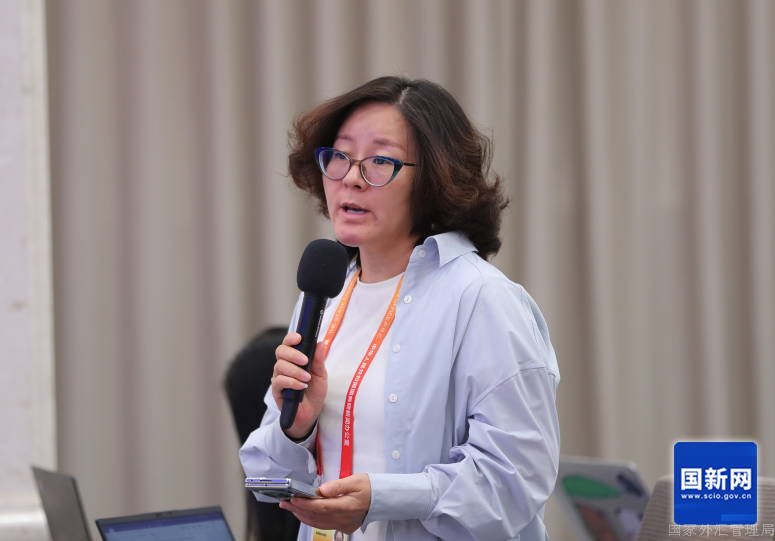
(Journalist from Lightning News asks questions / Photo by Liu Jian)
Journalist from Lightning News:
In the first quarter of this year, China's external debt at full caliber increased slightly. What are the main reasons behind this? And how do you assess the outlook for external debt going forward? Thank you.
10:40:16, July 17, 2026
Li Bin:
I will hand it over to Xiao Sheng, Director General of the Capital Account Management Department.
10:41:48, July 17, 2026
Xiao Sheng:
Thank you for your question. External debt refers to repayable liabilities owed by domestic entities to non-residents, including overseas bond issuance, cross-border borrowing, onshore bonds held by overseas institutions, and overseas deposits placed within China. Moderate external borrowing allows domestic enterprises and banks to leverage both domestic and international markets to diversify financing channels and improve operational efficiency, though sustained monitoring is required to guard against risks stemming from excessive debt volumes.
In terms of the overall scale of external debt, China's external debt has remained broadly stable over the past period. Over the last three years, China's external debt has remained largely stable at around USD 2.3 trillion to USD 2.5 trillion. Given changes in the external environment and adjustments in domestic entities' financing needs, some fluctuation in external debt over a given period is a normal phenomenon. At the end of the first quarter of 2026, China's external debt at full caliber stood at USD 2.41 trillion, up 3.6% quarter on quarter. This increase mainly came from three sources: first, an increase in deposits held by overseas institutions within China. Second, growth in domestic entities' own financing needs, leading to an increase in loans borrowed from abroad. Third, relatively fast growth in China's foreign trade, which led to an increase in trade credit-related financing.
In terms of the structure of external debt, China's external debt structure has continued to improve in recent years. At the end of the first quarter of 2026, RMB-denominated external debt accounted for 55% of China's total external debt, up 10 percentage points from 2022; medium- and long-term external debt has remained stable at over 40% of the total, and the risks of maturity mismatch and currency mismatch in China's external debt have declined significantly.
In terms of risk conditions, China's external debt currently carries a relatively high degree of safety. Internationally, the safety of an economy's external debt is generally assessed using four key indicators. First, the debt-to-GDP ratio, which measures the overall debt burden as the ratio of external debt outstanding to GDP. In 2025, this stood at 11.9% for China, below the international safety threshold of 20%. Second, the debt-to-export ratio, which measures the ability of export earnings to service external debt as the ratio of external debt outstanding to trade export revenue. It was 56.3% for China, compared with an international safety threshold of 100%. Third, the debt service ratio, which measures short-term debt service pressure as the ratio of the total principal and interest due in a given year to trade export revenue. It was only 6.2% for China, far below the 20% warning threshold. Fourth, the ratio of short-term external debt to foreign exchange reserves, which measures emergency repayment capacity. It was 39.2% for China, also notably below the 100% warning threshold.
Finally, in terms of the development outlook, China's external debt is expected to maintain a steady development trend going forward. At present, China's economy is running generally smoothly, foreign trade continues to grow at a relatively fast pace, and enterprises and other sectors will borrow external debt based on their actual needs. At the same time, as financial market opening-up continues to steadily advance and the asset allocation value of RMB assets continues to become more apparent, foreign investment in RMB bonds is expected to rise steadily.
Going forward, we will continue to step up policy support for cross-border financing facilitation, help enterprises make better use of both international and domestic markets for financing, and earnestly serve the healthy development of the real economy. Thank you.
10:45:35, July 17, 2026

(Journalist from 21st Century Business Herald asks questions / Photo by Liu Jian)
Journalist from 21st Century Business Herald:
The SAFE recently announced that it will issue a new batch of QDII investment quotas and promote more efficient coordination between foreign exchange administration policy and RMB cross-border policy. Could you tell us about the current progress in issuing QDII quotas? What considerations have gone into the coverage of institution types and the allocation of quotas this time around? Thank you.
10:53:40, July 17, 2026
Li Bin:
I'll hand it over to the Director General Xiao Sheng for this QDII-related question.
10:54:10, July 17, 2026
Xiao Sheng:
Thank you for your question. QDII quotas are indeed a focus of considerable attention. The QDII scheme is an important institutional arrangement in the opening-up of China's financial markets, with clear regulations and rules governing qualification requirements and quota issuance, among other aspects. For a long time, the SAFE has consistently upheld the principle of balancing development with security, taking into comprehensive account factors such as the macroeconomic situation, sustained market demand, and institutions' compliance records. Guided by the principles of fairness and impartiality, and following standardized, process-based criteria, the SAFE has issued QDII quotas in a steady, orderly, and regular manner. The scale of issuance is well matched with the prevailing cross-border payment and receipt conditions.
Going forward, the SAFE will do a better job of balancing development with security, steadily and in an orderly manner advance the two-way opening-up of financial markets, and issue QDII quotas on a regular basis. We will support market institutions with strong investment management capabilities, well-recognized products, and high standards of compliance awareness and management, enabling them to play a greater role in QDII business. At the same time, we will further tilt allocations toward publicly offered funds, so as to improve the inclusiveness of QDII business.
Regarding the new round of QDII quotas you mentioned, we are currently working hard to advance the relevant preparatory work, with the aim of issuing the new round of QDII quotas as soon as possible, so as to better support and serve the genuine and compliant overseas securities investment needs of domestic residents. Thank you!
10:54:33, July 17, 2026
Shou Xiaoli:
We will take two final questions.
10:55:56, July 17, 2026

(Journalist from The Paper asks questions / Photo by Liu Jian)
Journalist from The Paper:
With the ongoing adjustment of China's economic structure, trade in services has drawn growing attention. Could you tell us about the new changes in China's cross-border trade in services, and what is the outlook for future trends? Thank you.
11:02:30, July 17, 2026
Li Bin:
Thank you for your question. Let me brief you on the relevant situation.
In recent years, China's trade in services has maintained a generally sound development trend, playing an important role in supporting industrial upgrading, meeting people's livelihood needs, driving job creation, and promoting the development of the global services sector.
Economic structural adjustment has driven the steady expansion of China's cross-border services trade. Balance of payments data show that, over the past five years, China's trade in services (imports and exports combined) has grown at an average annual rate of 12%, with its scale exceeding USD 1 trillion in 2025. In the first five months of 2026, trade in services continued to grow by 10% year on year. The share of trade in services in total trade in goods and services can be used to gauge changes in a country's trade and economic structure; in 2025, this share stood at 13.5% for China and has been rising steadily, reflecting a gradual shift in China's trade structure toward the coordinated development of goods and services, with services playing an increasingly significant role in China's economic development.
On the import side, China's services imports have grown steadily, better meeting residents' diverse needs and providing strong support for the development of global trade in services. In 2025, China's services imports exceeded USD 620 billion, making it the world's second-largest market for services imports. China's trade-in-services deficit came in at nearly USD 240 billion, the largest such deficit among all countries, reflecting the fact that China has provided a large market for the development of the global services sector. China's demand for services imports spans areas such as travel, intellectual property, transportation, and business services, offering residents a wider range of choices and higher-quality products for services consumption. China's services imports come from a broad range of markets, spanning both developed and developing economies, effectively boosting employment and economic growth in those economies.
On the export side, growth in China's services exports has accelerated, with notable improvements in quality and efficiency. Over the past five years, China's services exports have grown at an average annual rate of 14%, with the 2025 scale nearly double that of 2020. In the first five months of 2026, China's services exports grew by 21% year on year, driven mainly by two factors. First, China has continued to expand visa-free entry policies for foreign visitors and refined payment services and departure tax refund policies for foreign nationals visiting China. In the first five months of this year, cross-border travel revenue grew by 37% year on year, contributing 24% of the growth in services exports. Second, China has been vigorously developing technology-based and digital/intelligent services, promoting the integrated development of manufacturing and services, and continuing to strengthen its competitive edge in emerging producer services trade. In the first five months of this year, combined revenue from computer and information services, business services, and intellectual property services grew by 17%, contributing 45% of the growth in services exports.
China attaches great importance to the comprehensive development of the services sector and has been implementing the action plan to expand capacity and improve the quality of services. Looking ahead, the scale of trade in services is expected to continue expanding, and the level of digitalization, standardization, integration, and internationalization in services will be further enhanced. The SAFE will comprehensively deepen reform of foreign exchange administration for trade in services, expand pilot programs for high-level opening-up in cross-border trade, and contribute to the high-quality development of trade in services. Thank you!
11:03:09, July 17, 2026
Shou Xiaoli:
The last question.
11:03:32, July 17, 2026

(Journalist from National Business Daily asks questions / Photo by Liu Jian)
Journalist from National Business Daily:
In recent years, the SAFE has introduced a number of facilitation measures for cross-border trade and investment. Could you tell us about the basic approach behind these facilitation measures and the reform of foreign exchange administration methods, as well as the results achieved? Thank you.
11:03:42, July 17, 2026
Li Bin:
Thank you. Let me answer this question. In recent years, the SAFE has continued to deepen reform and opening-up in the foreign exchange sector, promoting the facilitation of cross-border trade and investment, with the aim of helping business entities reduce the steps involved in handling foreign exchange transactions, improve processing efficiency, and deliver more benefits to enterprises and the public. If we take stock of these facilitation measures, the underlying approach and the shift in the mode of administration can be summarized in the following aspects:
First, greater emphasis has been put on providing convenience for market entities. In the past, facilitation policies were largely designed and advanced on a project-by-project or transaction-by-transaction basis. In recent years, following the principle that "compliance first, convenience for the trustworthy," we have shifted the focus of management from transaction-based oversight toward entity-based management, placing greater emphasis on providing comprehensive convenience based on an enterprise's overall credit standing, enabling trustworthy and compliant entities to process transactions faster and more efficiently. For example, in recent years, we have continued to advance the reform of banks' foreign exchange business operations, under which banks handling foreign exchange transactions for enterprises with a strong credit record can now do so simply on the basis of the enterprise's instructions, a change from the previous practice of reviewing documentation transaction by transaction, which has substantially cut processing time. As of the end of June this year, the number of banks participating in this reform of foreign exchange business operations had risen to 33, essentially covering the main banks handling cross-border business. Banks have designated a total of 53,000 high-quality client enterprises, up 27% from the end of 2025; in the first half of this year, the value of transactions processed for these enterprises under facilitated procedures exceeded USD 580 billion, doubling year on year.
Second, greater emphasis has been put on in-process and post-transaction management. The foreign exchange transactions have gradually evolved from a system focused primarily on pre-approval toward a framework that emphasizes pre-transaction facilitation, in-process monitoring, and post-transaction verification. In recent years, the SAFE has continued to reduce the number of administrative licensing items and simplify licensing procedures, while making follow-up management, including monitoring, verification, and law-enforcement checks, more precise and robust, further improving processing efficiency. For example, we have changed the registration of enterprises on the trade-related foreign exchange receipts and payments name list from requiring the SAFE approval to being handled directly by banks, and have relaxed a number of capital account licensing requirements, including those for Qualified Foreign Institutional Investors/RMB Qualified Foreign Institutional Investors (QFII/RQFII) and overseas listing registration. During the 14th Five-Year Plan period, the number of administrative licensing transactions in the foreign exchange sector fell by 70%. At the same time, we have advanced online processing of foreign exchange business, enabling frequently handled matters to be processed online through the "Digital Foreign Exchange Administration" platform, which has significantly improved processing efficiency.
Third, greater emphasis has been put on coordination between local and foreign currencies. As the cross-border use of the RMB has increased, the People's Bank of China and the SAFE, following the principle of "same business, same management," have integrated local and foreign currency treatment into policy-making and business procedures. For example, we have established integrated local and foreign currency cash pools for multinational corporations, supporting group enterprises in coordinating funds across domestic and overseas operations and across currencies, thereby lowering financing costs. We have unified the administration of local and foreign currency outbound lending by domestic enterprises, making it easier for enterprises to engage in outbound lending based on their genuine business and financing needs. We have also unified local and foreign currency fund management policies related to domestic enterprises' overseas listings, clarifying that proceeds raised from overseas listings, as well as proceeds from the reduction or transfer of shares, may be repatriated in either foreign currency or RMB. We have advanced the development of a unified local and foreign currency bank settlement account system, effectively reducing enterprises' account management costs. At present, most types of cross-border investment and financing business have essentially achieved a single, unified set of rules covering both local and foreign currencies, allowing for one-stop processing at the SAFE or through banks.
Fourth, greater emphasis has been put on empowering services through technology. We have explored the use of digital technology and artificial intelligence, among other tools, to make foreign exchange transactions more convenient to process, risk identification more precise, and management and services more user-friendly. For example, the SAFE has used blockchain technology to build a cross-border financial services platform that connects and shares relevant data from tax authorities, insurers, enterprises, and logistics companies, making it easier for banks to handle trade financing, exchange rate hedging, and other business, with good results achieved so far.
Fifth, greater emphasis has been put on policy evaluation. Once a foreign exchange policy is introduced, what matters most is how it performs on the ground, whether banks, enterprises, and other entities genuinely benefit from the added convenience. The SAFE has established two evaluation mechanisms, one for "the effectiveness of foreign exchange policies" and one for "the regional foreign exchange ecosystem," working to achieve closed-loop management and effectiveness evaluation covering the "last mile" from policy rollout to tangible, perceptible benefits for enterprises and residents, and dynamically refining and adjusting relevant policies based on evaluation results, so as to genuinely benefit enterprises and the public.
Finally, we have consistently upheld the combination of promoting facilitation with guarding against risk, safeguarding the bottom line of security under conditions of opening-up. We have continued to refine the two-pronged management framework combining macroprudential regulation with microprudential oversight. On the one hand, we will strengthen countercyclical adjustment and expectation management when necessary, to maintain the stable operation of the foreign exchange market and firmly guard against systemic risk. On the other hand, we will strengthen oversight of the foreign exchange market and crack down hard on illegal and non-compliant foreign exchange activities such as underground banks. In the first half of this year, more than 300 related cases were investigated and dealt with, with confiscated funds and fines exceeding RMB 400 million, effectively safeguarding order in the foreign exchange market.
Going forward, the SAFE will further step up the supply of facilitation policies, and work to build a foreign exchange administration system that is more convenient, more open, more secure, and smarter, better serving high-quality development and high-level opening-up. Thank you.
11:06:58, July 17, 2026
Shou Xiaoli:
Thank you Deputy Administrator Li Bin and all speakers. Thank you to all journalists for your participation. This is the end of today's press conference. Goodbye.
11:08:42, July 17, 2026
(Source: Website of the State Council Information Office)
